
DOOH examples can range from weather triggered billboard copy, right to facial recognition kiosks and even to QR code driven campaigns and 3d billboard anamorphic activations that stop pedestrians mid-street.
The best DOOH executions share one particular quality: they use the screen, the environment, and the audience moment together – and not just the screen alone.
What Are Some of the Best Real-World DOOH Examples?
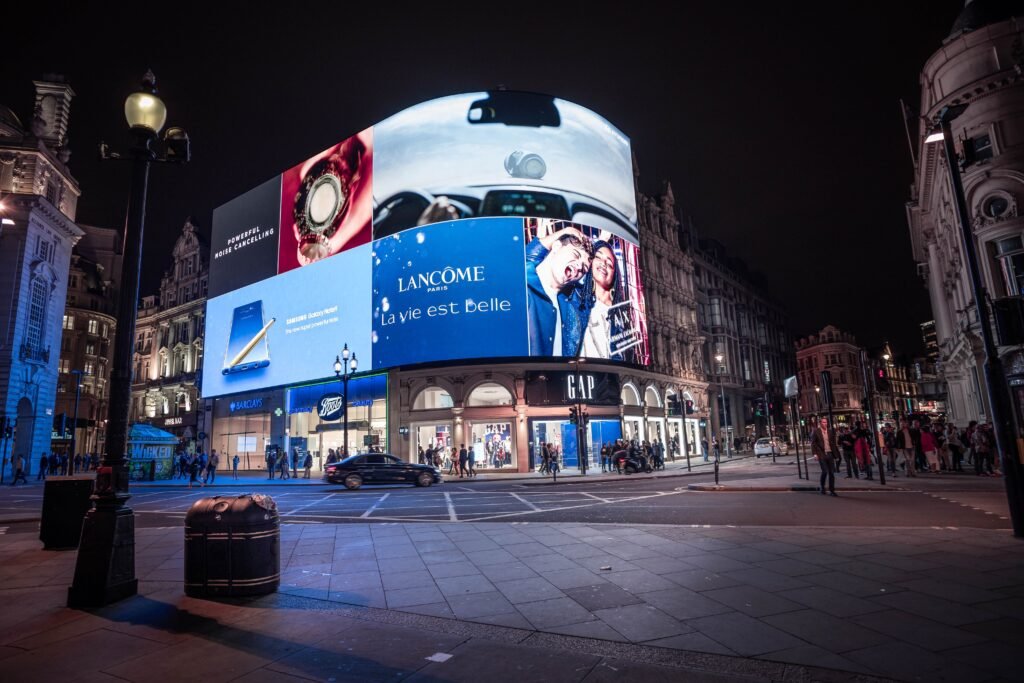
Below are some of the most effective real-world DOOH examples:
GMC: Facial Analytics & Dynamic Creative
GMC‘s campaign about their Acadia SUV at Santa Monica Place used a camera system in order to anonymously detect audience demographics. These demographics included age and gender and served one of over 30 pre-packaged videos matched to the viewer right in front of the screen.
If the system detected a smile – it delivered a video responding to it. Or if a family was identified, it played a family-oriented package video. The digital signage display amped up engagement with interactive games when the viewers lingered on.
This is exactly what contextual DOOH advertising looks like in practice – a placement that responds to who is actually watching.
Douwe Egberts: Yawn Detection at the Airport
Douwe Egberts ran a DOOH campaign at the O.R. Tambo International Airport located in South Africa where a kiosk dispensed a free cup of coffee whenever it detected a traveller that was yawning in front of the camera.
The video of the activation garnered over half a million views after it was posted online. It is a small precise interaction but it demonstrates how immersive out-of-home display can do when the technology matches the audience moment.
Just imagine a commuter waiting at an airport who is already fatigued and then he encounters something that directly responds to his physical state. No doubt the resonate factor is almost immediate and no traditional banner ad can help you achieve that.
Sony Pictures: Augmented Reality on a London Street
When it was time to launch the Emoji movie, Sony Pictures actually deployed a digital billboard on a high-footfall area in London Street that used augmented reality software in order to detect viewer faces, genders and even their expressions.
It then overlaid corresponding emoji characters on the screen in real-time. What this type of strategy did was it made the viewers become a part of their advertisement. Many people stopped to photograph the display and even shared it on online platforms, which extended the campaign reach immensely.
This type of outdoor advertising uses organically produced user generated content to amp up the entire campaign. This digital out of home advertising execution created an experience that was actually memorable campaign material – it was interactive and shareable without any paid social spend.
Lancôme: DOOH Tied to a Social Cause
On International Women’s Day, Lancôme ran a very unique campaign in Portugal where a digital displays unit prompted female pedestrians to smile and each recorded smile then triggered a one Euro donation to a scholarship fund for girls. The OOH campaign was then paired with social media with relevant hashtag usage that helped drive mobile integration.
This is a very clear example of how DOOH ads can amp up emotional engagement beyond what static billboards can achieve. The call to action was very simple, just a smile, and the result was a physical interaction right from the consumer, social amplification as well as brand association with a genuine cause..
How Are B2B Brands Using DOOH?
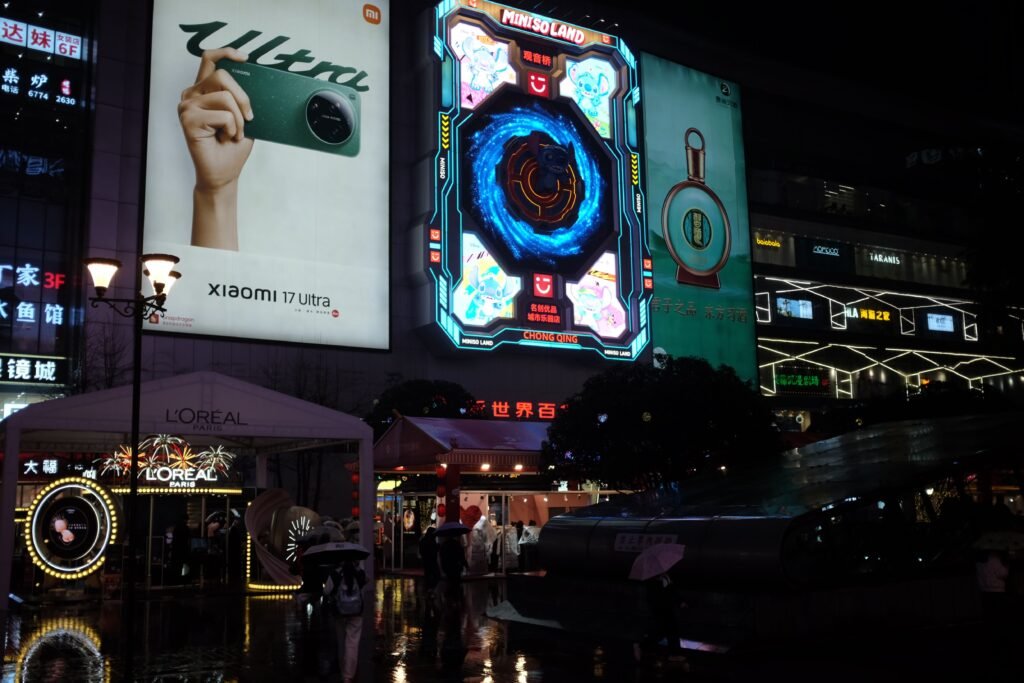
Digital OOH ads are not just a consumer brand tool any longer. B2B brands also use the DOOH in office buildings, lobbies and elevator screens in order to reach people who are business decision makers during the workday in a distraction-free environment.
The tactics that B2B brands use across multiple formats often include:
QR codes on a digital screen can easily attract professionals to white papers, webinar registrations, or landing pages, helping connect physical and digital touch points right in one scan.
- QR Codes and URLs: QR codes on a digital screen can easily attract professionals to white papers, webinar registrations, or landing pages, helping connect physical and digital touch points right in one scan.
- Case Study Creative: Short and visually compelling success story summaries can help create credibility in the same environment where procurement decisions are being made.
- Contextually Aligned Content: An IT solutions brand advertising alongside technology editorial content in an office space or screen can achieve higher relevance than the same ad running on a general billboard.
- Real-time Data Updates: Programmatic DOOH now allows time-sensitive offers to be updated at the venue level based on audience needs & campaign pacing.
Along with this, analytics, brand-lift studies and attribution tools also make programmatic B2B DOOH campaign performance measurable at a level that previous generations of traditional OOH simply could not support.
What Creative Approaches Make DOOH Stand Out?
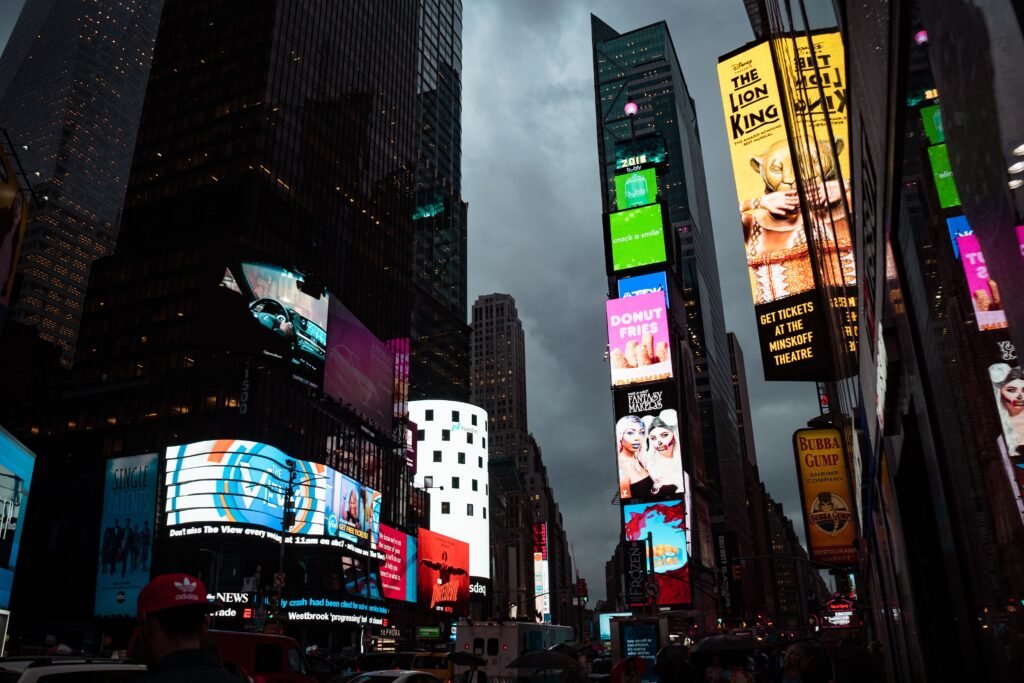
Impactful OOH creative is built for the environment and not adapted for social media mediums or TV assets. The creative process for large-format digital outdoor actually needs to account for viewing distance, dwell time and the fact that many people are often seeing the screen at the same time.
The most standout executions tend to use:
- Dynamic creatives that are triggered by real-time data be it weather, time of day, life, sport, scores, etc.
- Augmented reality along with interactive elements that create immersive experiences that are beyond passive viewing.
- 3D billboard anamorphic formats that can easily generate organic sharing along with million views-level earned media.
- User-generated content integration that can amp up the viewers sense of participation.
- Many brands have used the ooh creatives that respond to proximity time and even the commuter’s journey stage to connect with consumers at the precise moment in their day.
Impactful digital out-of-home ads have consistently treated the ooh advertising environment as an active creative element, for example using placement, timing & audience context as tools rather than just constraints.
Also Read: Cutting-Edge OOH Advertising Ideas for Modern Brands
Conclusion
The best DOOH examples prove that the digital out-of-home ads are no longer just about advertising with a screen attached. It is now a contextual, real-time & interactive – capable of delivering memorable campaigns that can actually connect with consumers in ways that no other format can replicate in the real-world scenario.
Digital out-of-home market size continues to grow as more brands are now discovering what effective DOOH campaigns can do for their brand awareness. At Selvel One, we understand this and help brands plan and execute high-quality outdoor advertising that offer measurable results. Contact us today to know more.
FAQs
What does DOOH mean?
In short, DOOH stands for Digital Out-of-Home Advertising that is delivered on digital screens in public places like billboards, transit panels, retail screens, etc.
Are billboards OOH or DOOH?
Billboards can be either, for example, a printed vinyl or a printed billboard is called a traditional OOH format because it is static and fixed. On the other hand, a digital billboard will display dynamic content on an LED screen and become the format within DOOH. It can rotate multiple advisors, update creatives in actual time & more.
What are the main benefits of DOOH advertising?
DOOH advertising can offer you many benefits like real-time creative flexibility, audience targeting, measurability, omni-channel integration, contextual relevance and much more.