
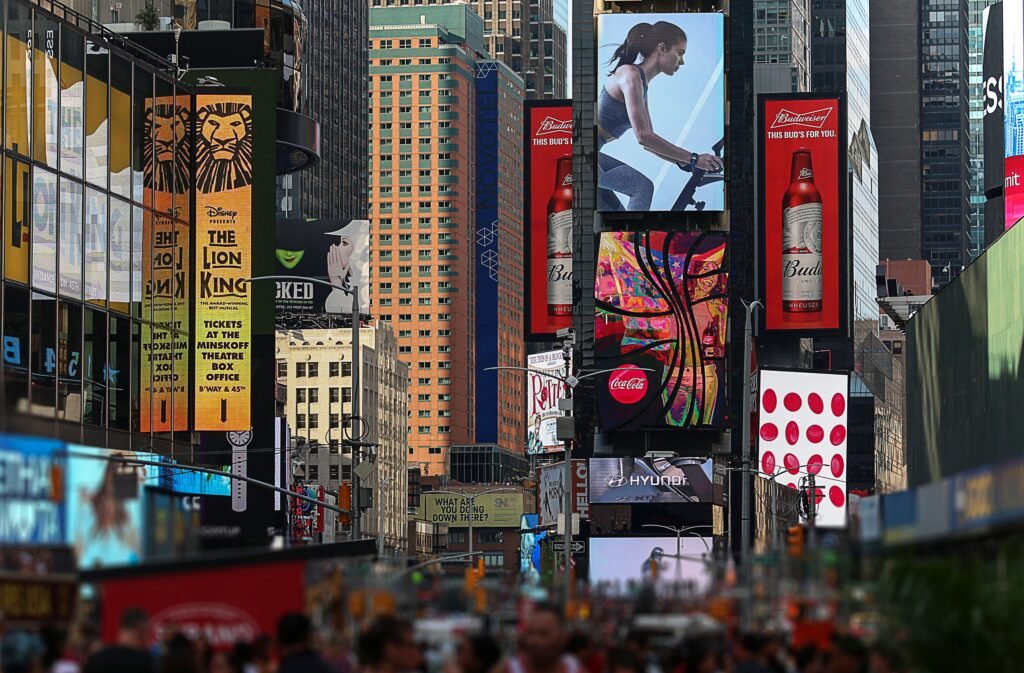
Programmatic OOH can be explained as the process of automated buying, selling and delivery of out-of-home ads via real-time bidding on digital screens displayed in public places.
Advertisers can now set conditions under which ads should run, instead of locking in fixed placements through manual negotiations. This type of advanced system serves ads automatically when those conditions are met and that is how programmatic OOH works in one sentence.
But the mechanics behind the entire process of “how does programmatic OOH work,” is rather complicated and worth understanding properly.
What Makes Programmatic DOOH Different From Traditional OOH?
What programmatic DOOH does differently is that it does not change where the ads appear, but it changes how they are bought. The digital billboards, transit panels and place-based screens are the same. What changes is the automation layer that is sitting on top of them.
Traditional OOH campaigns are planned and are booked upfront via insertion orders with fixed locations and they come with schedules that are pre-confirmed before launch. So, there is no scope for flexibility once the campaign goes live.
However, programmatic digital out-of-home replaces that process with software-driven buying and comes with targeting rules, budgets and eligibility criteria that can easily determine where and when to run ads continuously throughout the campaign.
| Traditional OOH | Programmatic DOOH | |
| Buying method | Manual negotiation & insertion orders | Automated via real-time bidding |
| Schedule | Fixed upfront | Dynamic & rules-based |
| Targeting | Location & duration | Contextual, audience data, time of day |
| Creative Assets | Static & pre-printed | Can update creative in real time |
| Reporting | Periodic & post-campaign | Automated & faster delivery insights |
How Does the Buying Technology Actually Work?
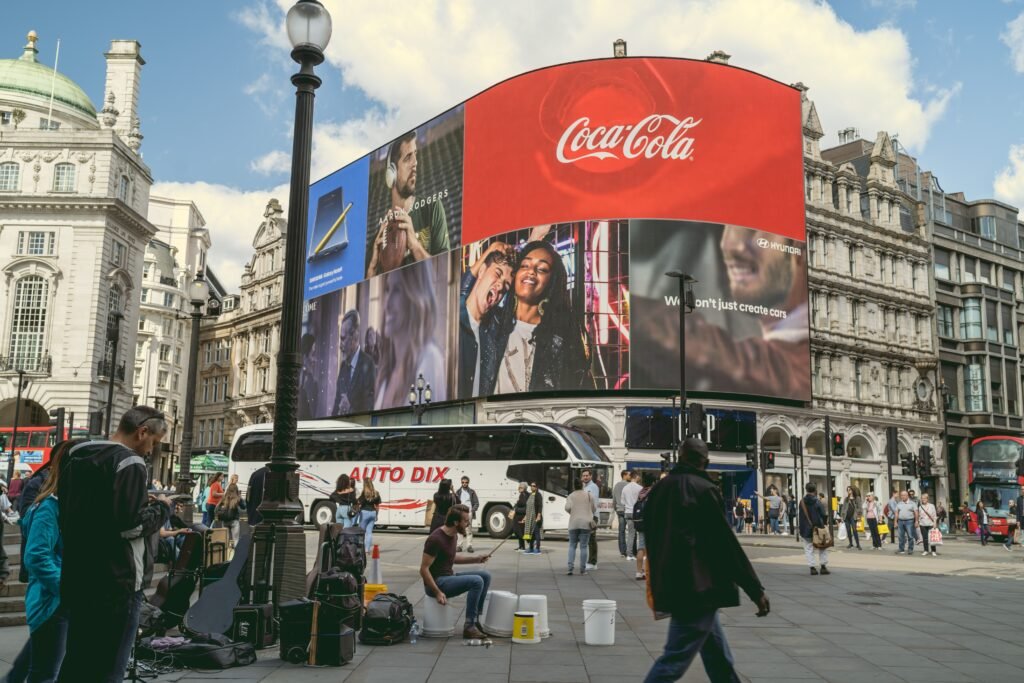
Programmatic digital buying in OOH tends to use the same infrastructure as other online programmatic channels, for example, demand-side platforms, supply-side platforms and real-time bidding. But it is adapted for one-to-many physical environments.
Here is the entire process in order:
- The advertiser or the marketer first sets campaign parameters in a demand-side platform, which includes budget, target audience, location criteria, time of the day, environmental triggers, and more.
- The DSP then connects to supply-side platforms(SSPS) that represent DOOH inventory from media owners.
- When a screen becomes available & matches the campaign’s eligibility criteria – a bidding request is automatically triggered.
- The DSP then evaluates the impression opportunity and then submits a bid.
- If the bid wins, then the creative is served to that screen in real time.
- Delivery data then flows back to the DSP for reporting against KPIs.
This is what makes programmatic DOH campaigns fundamentally different from other traditional formats. The system is continuously evaluating and responding, rather than simply following a pre-set schedule.
Also Read: Types of OOH Advertising: A Complete Guide for Brands
How Does Targeting Work in Programmatic OOH?
Precision targeting is driven by contextual as well as aggregated signals instead of individual identifiers and this is the key difference from online programmatic buying where there are no cookies, no device IDs or no individual user tracking involved.
It offers targeting across different types of dimensions:
- Time of Day: The ads only become eligible only during your chosen time of the day, be it during morning commutes or night-time crowds.
- Location and Environment: These include screen type, venue category, proximity to points of interest
- Weather and Situational Data: Local conditions, nearby events, traffic or transit status
- Audience Segments: Aggregated movement data & anonymized audience demographics that point out who is more likely present at a given location & moment
- First-party Data Integration: Brands can use their own audience data to inform where & when campaigns activate
Why Are Advertisers Choosing Programmatic OOH?
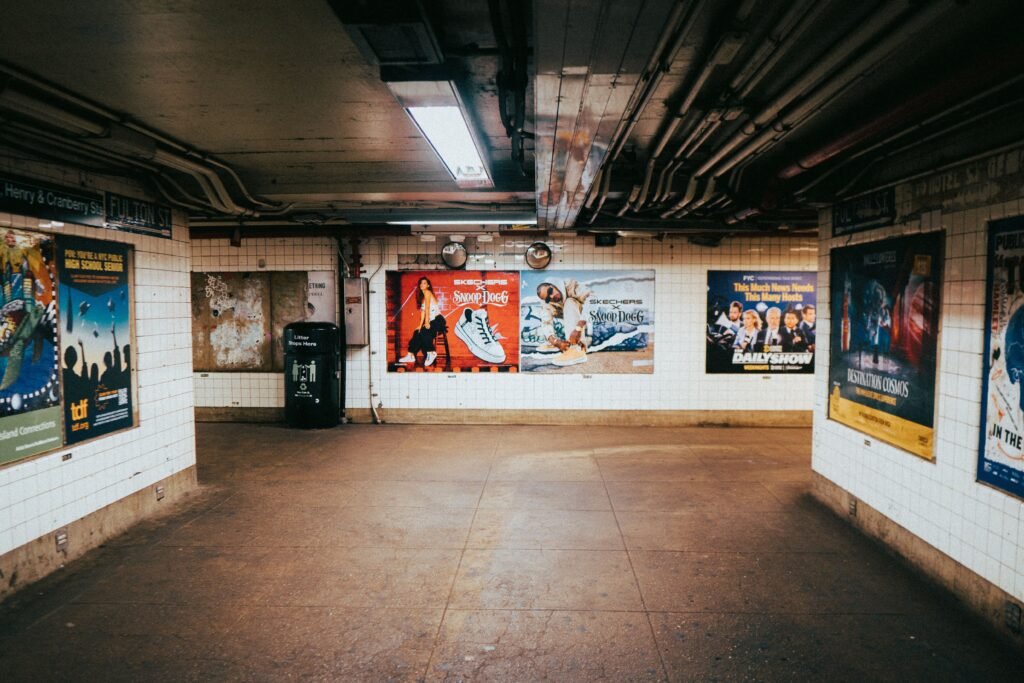
When understanding how does programmatic OOH work, you must also understand why advertisers are now choosing it more than ever. Programmatic OOH offers you measurable improvements all across the core concerns of any advertising strategy. It is important to note that according to IAB Australia’s 2025 report, almost 75% of agencies cite flexible buying as a primary and a major reason for adoption of PDOOH.
Using programmatic OOH offer the below mentioned main advantages:
- Speed: You can go directly from planning to launch in just hours rather than weeks with in-flight adjustments possible at any point of time.
- Audience Targeting: You get data-driven delivery informed by real-world signals and not just geography.
- Measurable ROI: You get in-screen sensors, device ID passbook and geofencing, which allow campaign performance to be tied to downstream actions like store visits.
- Brand Lift: OOH campaigns consistently show measurable uplift when it comes to awareness as well as purchase consideration among exposed audiences.
- Creative Flexibility: You can update creative in real time which allows messaging to adapt to conditions without reprinting or any manual intervention.
Programmatic DOOH campaigns also allow ad spend to be allocated across the funnel with full funnel strategies using billboard placements for brand awareness at the top level and transit or place-based screens for audience targeting and conversion closer to the point of purchase, according to Broadsign.
Is Programmatic OOH Measurable?
Yes, it is measurable and this is one of the most important shifts programmatic has brought to the channel. Traditional OOH was historically a bit difficult to measure beyond estimated footfall and surveys. But programmatic DOOH now introduces trackable delivery data along with multiple attribution methods.
Measurable outcomes that are available include:
- Verified impression delivery per screen as well as per campaign
- Audience verification is also available using anonymized mobile movement data
- Store visit lift studies can be compared with exposed versus unexposed audiences
- Brand lift measurement can also be done via survey panels
- ROI attribution linking, OOH exposure to online search app activity or purchase behavior can also be implemented.
This type of visibility into campaign performance is one of the main reasons why programmatic OOH advertising is now attracting budgets from digital OOH buyers who want accountability.
Conclusion
So, how does programmatic OOH work? The answer ultimately comes down to applying familiar digital buying logic, DSPS, SSPS, real-time bidding, audience data, and automated buying and selling to physical out-of-home screens in public places.
Across the funnel, from brand awareness to conversion, it is enabling marketers to reach the right audiences with the right message and at the right moment in the physical world and not just on the screen someone chose to look at.
Selvel One brings this capability right to your market. We help connect brands to digital OOH inventory across major metros via both traditional and programmatic digital channels. Contact us today to know more.
FAQs
What are the primary examples of OOH advertising?
OOH advertising includes very large format billboards that you see on highways or arterial roads, digital screens in transit hubs or airports, bus shelter panels, taxi and vehicle wraps, and much more.
What exactly is programmatic OOH?
Programmatic OOH can be described as the automated buying, selling and the delivery of out of home ads that is done via real time bidding on digital screens.
How does OOH advertising work?
OOH advertising works by placing brand messages right on screens or physical surfaces in high traffic public locations. Advertisers can book advertising space either directly through media owners or programmatically through demand side platforms.