
A billboard on the highway, a panel on a bus stop or a screen in the mall corridor – that’s what out-of-home advertising in action looks like. And for most brands it’s one of the most powerful tools in the market. But what exactly is an OOH campaign meaning in today’s context and how does it exactly work?
What Does OOH Stand For?
OOH stands for out-of-home advertising. It refers to any form of advertising that tends to reach people outside of their homes, on the streets, in transit, at airports, in malls and even on rooftops. It is one of the oldest advertising formats in the market and is often considered resilient.
OOH advertising is broadly defined as any visual advertising media that is placed in public places where people naturally move through their daily life. Unlike online digital advertising or television ads, ooh home advertising cannot be skipped, scrolled passed or blocked. It simply exists in the outdoor environment.
Types of OOH Advertising For Campaigns
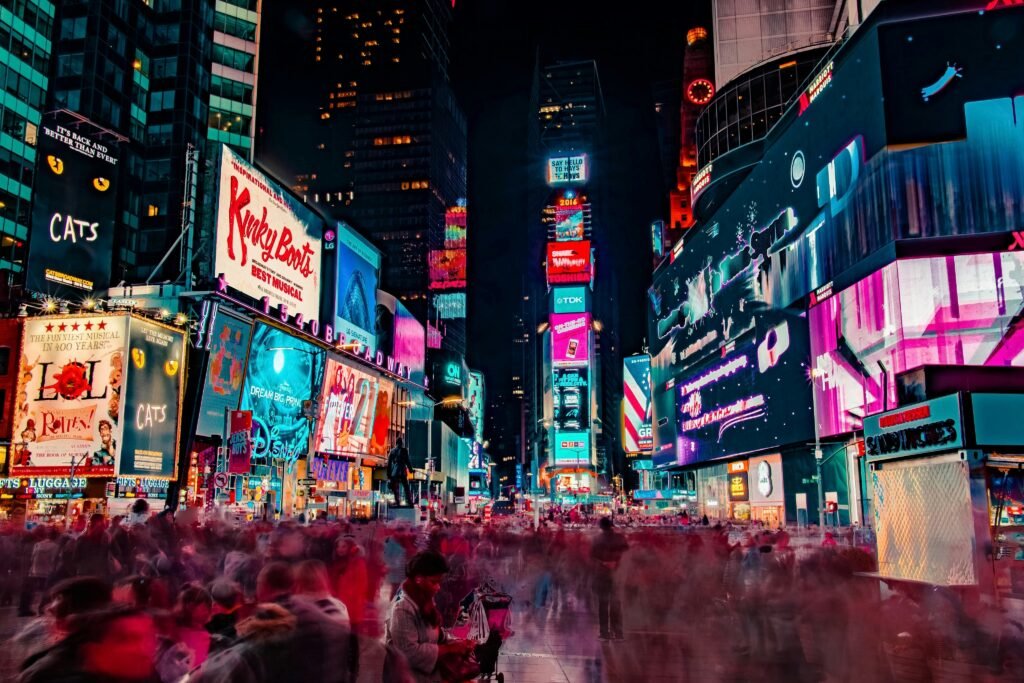
Before launching your campaign, you must first understand the types of OOH advertising available in the market. This will help clarify how an OOH campaign gets built. The different types of OOH advertising fall into a few primary categories.
Billboard Advertising
This is one of the most recognizable types of OOH. It includes large format billboard advertising on highways, arterial roads and city centers. It can be static OOH (printed) or digital, rotating creative or LED screens. Billboard advertising costs can vary significantly by the location, size and more.
Transit Advertising
This advertising tends to cover buses, metro systems, auto rickshaws, taxis, airports and more. It is a high-frequency touchpoint for daily commuters.
Street Furniture
Bus shelters, kiosks, benches and phone booths are used for street furniture ads. They include eye-level pedestrian facing placements with strong brand awareness potential in congested urban areas.
Digital OOH (DOOH)
Digital OOH uses digital screens that can display dynamic, time-triggered or even audience responsive content. Plus, a DOOH ad can be easily changed based on the current weather, time of day, footfall and campaign objectives. It is one of the fastest growing subset of OOH in the entire world.
How OOH Advertising Works?
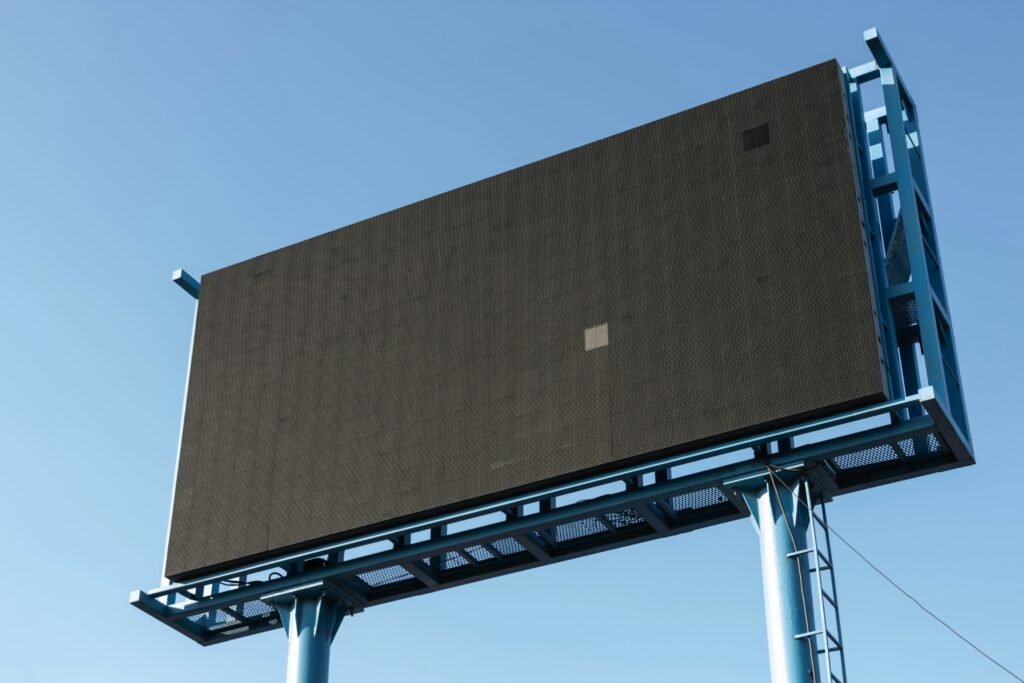
Out-of-home advertising works by placing brand new messages right in high traffic public spaces where target audience groups naturally tend to spend their time. OOH reaches people across their daily journey on the road while they are commuting, shopping, travelling and or even socialising.
OOH ad inventory is generally owned and managed by media owners who sell advertising space. They do this either directly or through advertising agency partners.
Traditional OOH uses static printed materials installed for fixed periods. Whereas modern OOHs specifically make use of digital assets and programmatic strategies. This allows creatives to be uploaded instantly, by target audience behavior.
OOH advertising works because it operates in a brand-safe and uncluttered environment. There is no algorithm deciding whether or when your ad appears. It does not get buried in someone’s inbox. When someone is exposed to an OOH ad, the impression is real, physical and often repeated across multiple journeys of the consumer.
OOH Campaign Meaning: What Makes a Campaign
An OOH campaign is a coordinated series of OOH advertisements across one or even more formats, designed to deliver a specific marketing objective over a period of time. Here is what the OOH campaign meaning looks like when put in practice:
- First, you need to fix your objective for your OOH campaign, be it brand launch, product awareness, footfall driving or event promotion.
- Then you need to select your format – choose between billboard advertising, transit, street furniture, DOOS or a mix of these.
- Then comes location. Your location strategy should include identifying where the target audience is most concentrated.
- Then it’s time for creative. You must strategically design your creative according to your chosen format, the viewing distance and the dwell time available.
- Make sure your objective meets your format. Do you want to run traditional OOH for sustained presence or use digital OOH for trust activation?
- Then comes OOH ad measurement which means tracking reach, frequency and downstream impact.
A well-structured advertising campaign in OOH just does not simply place ads in the public eye. It plans the entire journey of how the target audience encounters the brand across different environments.
OOH vs DOOH: What’s the Difference?
OOH versus DOOH is one of the most common questions that comes to mind during media planning. They are related but they are meaningfully different.
- Traditional OOH means the usage of static billboards, printed transit panels, and fixed street furniture. They tend to include long booking lead times & fixed creatives.
- On the other hand, digital OOH is screen-based, dynamic and flexible. A DOOH ad can easily be updated without any type of print or installation. The DOOH inventory can increasingly be bought programmatically. This enables marketing strategies to respond to real-world triggers.
Traditional OOH versus Digital OOH is not a competition. Both serve different objectives.
- Traditional Static OOH helps with sustained brand presence as well as mass reach, whereas,
- Digital OOH is better for targeted, contextual or time-sensitive messaging.
Both OOH and DOOH when used together can create the strongest overall outdoor strategy.
Benefits of OOH Advertising
Why exactly do brands use OOH as a core channel? Because the benefits of OOH advertising are well established.
Mass Reach with Local Precision
OOH reaches broad audiences easily while allowing hyper-local targeting by geography. A national brand can easily integrate OOH with city-by-city strategy
High-Impact Environments
Out-of-home advertising offers large formats as well as premium locations that command genuine attention. The other forms of advertising that reach people inside apps or inboxes simply cannot replicate this.
Brand Awareness at Scale
Repeated exposure is guaranteed with the help of OOOH as commuter routes build memory structures that drive long-term brand presence. OOOH brings awareness more efficiently per impression than most digital marketing channels.
Advertising that Reaches the Unreachable
Younger affluent urban audiences who use ad blockers and skip even pre-rolls are still exposed to an OOH ad every day. There is no skipping allowed. Advertisers that want to reach these groups effectively often tend to depend on out-of-home format.
OOH Advertising in India
OOH Advertising India is a very significant and fast growing industry. India’s urban density along with rising transit infrastructure when paired with the expanding digital screen networks – offers the country one of the most dynamic OOH advertising industry environments in the world.
Global benchmarks consistently show that markets with strong urban mobility like India’s metros can produce some of the MOST effective OOH campaigns globally. However, it is important to note that the cost of OOH advertising in India varies dramatically by city, location, format as well as duration.
Conclusion
OOH campaign meaning comes down to this: it is a coordinated, location-led advertising strategy that tends to use public space to build brand awareness, drive recall as well as reach the target audience in their actual real-world environment.
Out-of-home advertising works only because It is unavoidable, contextual and high-frequency by design. The future of OOH advertising is one where traditional OOH and digital OOH work together, each serving a different role in a unified modern advertising strategy.
If you need to know about OOH advertising at scale, then you must contact SelvelOne. With decades of expertise across OOH formats, right from large-format billboard advertising to transit advertising and digital screens, SelvelOne has helped brands plan, execute & measure their advertising effectively.
Get in touch with our team today to discover what a properly planned OOH campaign can deliver for your brand.
Frequently Asked Questions
What exactly does OOH mean in advertising?
OOH stands for Out-of-Home advertising which means that it reaches people outside their homes through different ad placements like billboards, transit panels, digital screens, street furniture and more.
What is the main difference between OOH and DOOH?
In short, OOH is the broader category that covers all outdoor formats, whereas DOOH specifically refers to the digital screen-based ad placements that offer you dynamic data-driven creative delivery.
How exactly is OOH advertising measured?
It can be measured via mobile location data, footfall studies, brand lift surveys and direct response tools like QR codes embedded in static or even digital placements.